Indian Routes & TrailsA Signature of Excellence
Crown of the West: Temples, Wildlife & Island Forts — Mumbai & Gujarat — Indian Routes & Trails
All Journeys
13 Days / 12 Nights October – Marchheritagespiritualwildlife

Crown of the West: Temples, Wildlife & Island Forts — Mumbai & Gujarat

A 13-Day Journey from Mumbai through Ahmedabad, Jamnagar, Dwarka, Sasangir, Somnath, Diu, Palitana, Bhavnagar and Back to Mumbai

MumbaiAhmedabadJamnagarDwarkaJunagadhSasangirSomnathDiuPalitanaBhavnagarMumbai

Overview

About This Journey

Gujarat is one of India's most rewarding and underrated travel destinations — a state of extraordinary religious diversity, architectural ambition and natural wealth. This journey opens in Mumbai before Ahmedabad's UNESCO World Heritage old city delivers its pols, stepwells and the Sabarmati Ashram. The route then enters the Saurashtra peninsula: Jamnagar's four marble Jain temples, a day-excursion to the legendary Krishna city of Dwarka, the atmospheric fort of Junagadh with its Ashokan edicts, the Gir National Park for the last surviving wild Asiatic lions, the Somnath Jyotirlinga on the Arabian Sea coast, the Portuguese island fort of Diu, the extraordinary hillside Jain temple complex at Palitana (1,008 temples on Shatrunjaya Hill) and the Black Buck Sanctuary outside Bhavnagar. The journey returns to Mumbai by flight.

Highlights

Journey Highlights

Gateway of India, Elephanta Caves (UNESCO) and Chhatrapati Shivaji Terminus — Mumbai
Old City pols, stepwells, Sidi Sayed Mosque (Tree of Life lattice), Sabarmati Ashram and Modhera Sun Temple — Ahmedabad (UNESCO World Heritage)
Calico Museum of Textiles and Adalaj Vav stepwell — Ahmedabad
Four marble Jain temples (1574–1622 AD) — Jamnagar
Dwarkadish Temple (Jagat Mandir) and Rukmini Devi Temple — Dwarka (Krishna pilgrimage)
Uparkot Fort, Ashoka's 14 Rock Edicts (250 BC) and Buddhist caves — Junagadh
Gir National Park — sole remaining habitat of the Asiatic lion outside Africa
Somnath Temple (1 of 12 Jyotirlingas) — Arabian Sea coast
Diu Fort, St. Paul's Baroque church and St. Thomas Church — Portuguese island Diu
Shatrunjaya Hill — 1,008 Jain temples (Palitana)
Velavadar Black Buck Sanctuary — over 1,000 black bucks — Bhavnagar

Day by Day

Detailed Itinerary

Arrive at Chhatrapati Shivaji Maharaj International Airport (BOM) Terminal 2. Traditional welcome and transfer to hotel. Mumbai: India's financial capital. Afternoon Half Day Tour: heritage walk around Kala Ghoda — 1) Chhatrapati Shivaji Maharaj Vastu Sangrahalaya; 2) Jahangir Art Gallery; 3) University of Mumbai and Rajabai Clock Tower; 4) Bombay High Court; 5) Elphinstone College; 6) David Sassoon Library; 7) Yacht Club; 8) Royal Bombay Yacht Club; 9) Gateway of India — Mumbai's most famous landmark; 10) Taj Mahal Hotel (1903, built by Jamshedji Tata).

Activities

  • Airport welcome — CSMIA Terminal 2
  • Private transfer to hotel
  • Kala Ghoda heritage walk: Chhatrapati Shivaji Maharaj Vastu Sangrahalaya, Jahangir Art Gallery
  • Gateway of India
  • Taj Mahal Hotel (1903)
  • Marine Drive
Private air-conditioned car

Gateway of India. Boat cruise to Elephanta Caves (UNESCO, 6th century CE Shiva temples). Return. Chhatrapati Shivaji Maharaj Vastu Sangrahalaya (Prince of Wales Museum). Chhatrapati Shivaji Terminus (Victoria Terminus, 1888, Victorian Gothic). Crawford Market.

Activities

  • Gateway of India
  • Boat cruise to Elephanta Caves (UNESCO, 6th century CE)
  • Chhatrapati Shivaji Maharaj Vastu Sangrahalaya
  • Chhatrapati Shivaji Terminus (1888)
  • Crawford Market
Private car + boat

Morning breakfast, check out. Flight to Ahmedabad — Sardar Vallabhbhai International Airport (AMD). Ahmedabad: founded in 1411 AD as capital of the Sultanate of Gujarat by Sultan Ahmed Shah; named a UNESCO World Heritage City in 2017. Afternoon: experiential heritage walking tour. Begin at Lal Darwaja or Bhadra Fort, moving through the old city: Bhadra Fort and Teen Darwaza, narrow lanes of the old pols (residential quarters with carved wooden facades, ornate brackets, traditional courtyards, bird-feeding structures). Sidi Sayed Mosque — renamed for its exquisite stone latticework including the celebrated "Tree of Life" motif. Manek Chowk — historic commercial heart that transforms into a vibrant food and market district at night.

Activities

  • Flight Mumbai → Ahmedabad (AMD)
  • Heritage walking tour: Bhadra Fort and Teen Darwaza
  • Old city pols — carved wooden facades, ornate brackets, traditional courtyards
  • Sidi Sayed Mosque — "Tree of Life" stone latticework
  • Manek Chowk — historic commercial heart
Domestic flight to Ahmedabad

Morning: The Calico Museum of Textiles — established 1949 by the Sarabhai family in a beautiful old haveli. A major centre of India's textile trade since the 15th century. Rare collection: royal tents, carpets and costumes, religious paintings on cloth, embroideries, brocades, silk weaves and Kashmir shawls — most dating to the 17th–18th centuries. Modhera Sun Temple (98.7 km from Ahmedabad): built in 1026 AD by King Bhima I of the Solanki dynasty. Precisely laid out east-west so the sun's rays strike the inner sanctum at high noon. Extraordinarily detailed carvings depicting Hindu deities and scenes of everyday life. Adalaj Vav (35 km from Ahmedabad): Gujarat's finest stepwell, built in 1499 AD by Rudabai to conserve water and provide cool social interaction. Beautiful platforms and galleries descending to subterranean depths. Hatheesing Jain Temple (outside the Delhi Gate, built 1850, intricate carved marble). Dada Harir Vav stepwell (northeast of old city, 1500 AD, beautifully decorated carved walls). Sabarmati Ashram — second home to Mahatma Gandhi; Hriday Kunj cottage maintained much as he left it, with personal items (spectacles, wooden slippers, books and letters).

Activities

  • Calico Museum of Textiles — rare 17th–18th century textile collection in old haveli
  • Modhera Sun Temple (1026 AD) — sun-aligned, extraordinarily detailed carvings (98.7 km)
  • Adalaj Vav stepwell (1499 AD) — Gujarat's finest stepwell (35 km)
  • Hatheesing Jain Temple (1850, intricate carved marble)
  • Dada Harir Vav stepwell (1500 AD)
  • Sabarmati Ashram — Gandhi's Hriday Kunj cottage
Private car

Morning breakfast, check out. Drive to Jamnagar — founded by a local prince, Jam Rawal, in 1540 AD. Jamnagar's old walled city is dominated by the Lakhota Fort (original seat of rulers, damaged in 2001 earthquake; museum inside with fine sculptures from 9th–18th century excavation sites) and the Ranmal Lake which surrounds it. Jamnagar is well known for its four marble Jain temples: Vardhman Shah's Temple, Raisi Shah's Temple, Sheth's Temple and Vasupujya Swami's Temple. All built between 1574 and 1622 AD.

Activities

  • Drive Ahmedabad → Jamnagar (300 km, ~6 hrs)
  • Lakhota Fort — original Jamnagar rulers' seat (museum inside)
  • Four marble Jain temples (1574–1622 AD): Vardhman Shah, Raisi Shah, Sheth's Temple, Vasupujya Swami
Private car (300 km, ~6 hrs)

Morning breakfast. Same-day excursion to Dwarka — one of the holiest cities in Hinduism and one of the four main dhams. The name derives from "Dwar" (door in Sanskrit). The legendary city of Lord Krishna. Believed to have submerged six times — modern Dwarka is the 7th city built in this area. Dwarkadish Temple (also known as Jagat Mandir): built on the northern bank of the Gomti Creek, dates back approximately 2,500 years. Jagat Mandir has its own hall of audience and conical spire. The main attraction: the spectacular evening prayer (Aarti). Rukmini Devi Temple — a small temple and architectural masterpiece dedicated to Rukmini, the most important of Krishna's wives. Walls decorated with beautiful paintings depicting her pastimes with Krishna. Return to Jamnagar.

Activities

  • Drive Jamnagar → Dwarka (145 km, ~2 hrs)
  • Dwarkadish Temple (Jagat Mandir) — approximately 2,500 years old, Gomti Creek
  • Evening Aarti at Jagat Mandir
  • Rukmini Devi Temple — architectural masterpiece, Krishna and Rukmini paintings
  • Return to Jamnagar
Private car (145 km one way, ~2 hrs)

Same-day excursion. Return to Jamnagar for overnight.

Morning breakfast, check out. Drive to Junagadh — "Old Fort" — named after the ancient fort of Uparkot, built in the 4th century on a plateau at the eastern edge of the town. The fort is surrounded by massive walls (over 20m high in places) and a 90m-deep moat, once teeming with crocodiles. An ornate triple-arched gateway marks the entrance. Inside: cobbled path past Hindu temples to the now-deserted Jami Masjid (its carved stonework showing it was constructed on the remains of a Hindu temple). Nearby: cluster of Buddhist caves dating to the 2nd century. The fort also has two fine 11th-century stepwells. Inside the fort: 14 Rock Edicts of Emperor Ashoka inscribed on a great boulder in Brahmi script in Pali language (dated to 250 BC). On the same rock are inscriptions in Sanskrit.

Activities

  • Drive Jamnagar → Junagadh (225 km, ~5 hrs)
  • Uparkot Fort (4th century) — 20m+ walls, 90m moat
  • Jami Masjid within fort
  • Buddhist caves (2nd century AD)
  • Two 11th-century stepwells inside the fort
  • 14 Rock Edicts of Emperor Ashoka — Brahmi script, Pali language, 250 BC
Private car (225 km, ~5 hrs)

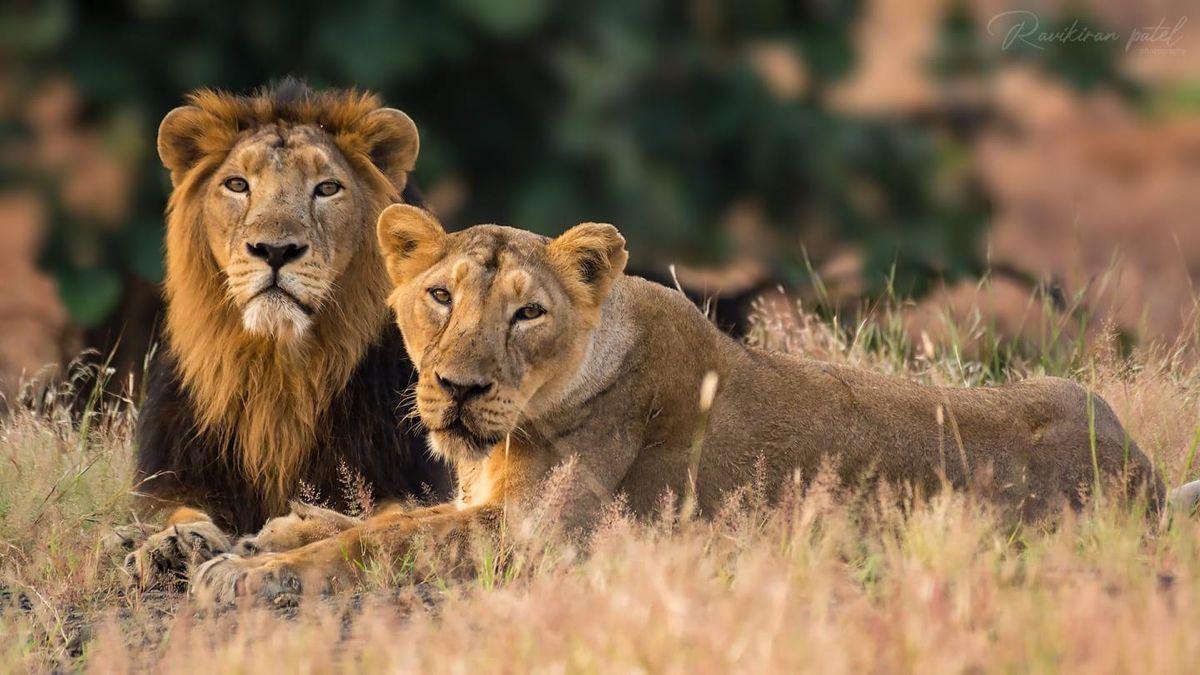
Morning breakfast, check out. Drive to Sasangir — best known as the sole home of the Asiatic lion. Sasangir National Park is the only remaining habitat of the lion outside Africa. Asiatic Lions are smaller than African lions, with a fold of skin along the belly and shorter manes. About 320 lions live in Gir's 250 sq km of dry scrub forest. A number of rivers wind through Gir — a heaven for wildlife including caracal, four-horned antelope, black bucks, a substantial leopard population and a variety of birds. Evening jeep safari to Gir National Park.

Activities

  • Drive Junagadh → Sasangir (65 km, ~2 hrs)
  • Gir National Park — sole remaining Asiatic lion habitat outside Africa
  • Wildlife: Asiatic lion (~320), leopard, caracal, four-horned antelope, black buck
  • Evening jeep safari to Gir National Park
Private car (65 km, ~2 hrs)

Breakfast, Lunch and Dinner included.

Early morning jeep safari to Gir National Park — best time for lion sightings. Return to hotel. Breakfast and check out. Drive to Somnath Temple — situated on the coast with a commanding view of the Arabian Sea. The Somnath Temple is revered as one of the 12 most sacred sites dedicated to Lord Shiva (Jyotirlinga). The temple's legendary wealth made it a target of successive plundering armies — Mahmud of Ghazni in 1026 is said to have made off with camel loads of gold and precious gems. The cycle of pillage and reconstruction continued for seven centuries. The present temple, made of stone, was built in 1950.

Activities

  • Early morning jeep safari — Gir National Park (best lion sightings)
  • Drive Sasangir → Somnath (90 km, ~2 hrs)
  • Somnath Temple — 1 of 12 Jyotirlingas, Arabian Sea coast, rebuilt in 1950
  • Somnath Museum
Private car (90 km, ~2 hrs)

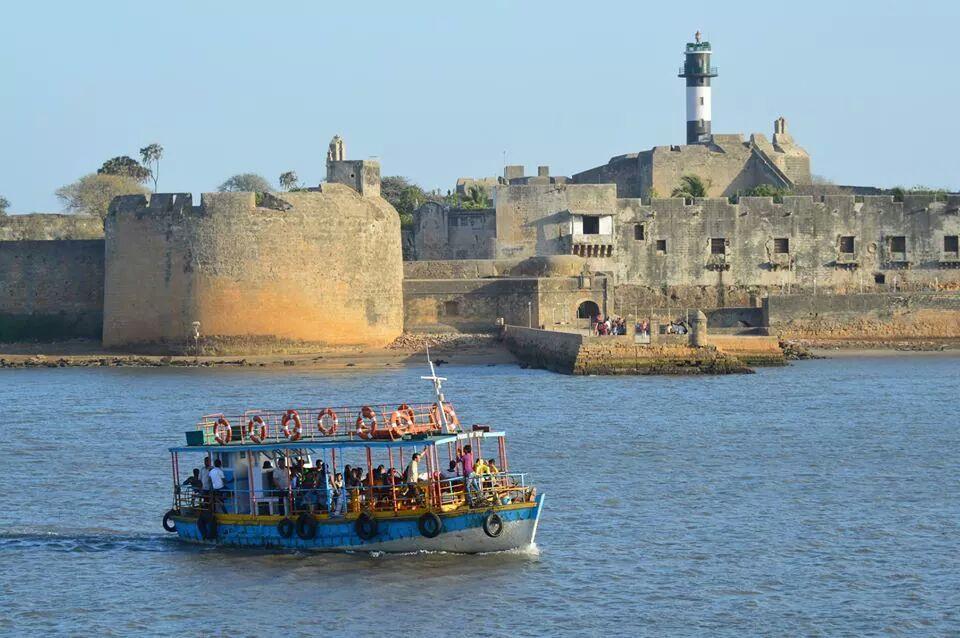
Morning breakfast, check out. Drive to Diu — a small coastal island in the Union Territory of Dadra and Nagar Haveli and Daman and Diu, separated from the mainland by a tidal creek. Famous for its fortress and Old Portuguese Cathedral. Ghoghla village (on the mainland) is also part of the Union Territory. Diu Fort: dramatically positioned on the eastern tip of the island overlooking the sea — panoramic views of the Arabian Sea. St. Paul's Church: renowned for its elaborate Baroque facade and richly decorated interiors. Old town exploration: Portuguese-influenced architecture. Naida Caves: fascinating network of naturally formed caves and rock passages. Ghoghla Beach: one of the island's most attractive stretches of coastline.

Activities

  • Drive Somnath → Diu (75 km, ~2 hrs)
  • Diu Fort — eastern tip of island, panoramic Arabian Sea views
  • St. Paul's Church — elaborate Baroque facade
  • St. Thomas Church
  • Old town — Portuguese-influenced architecture
  • Naida Caves — naturally formed caves and passages
  • Ghoghla Beach
Private car (75 km, ~2 hrs)

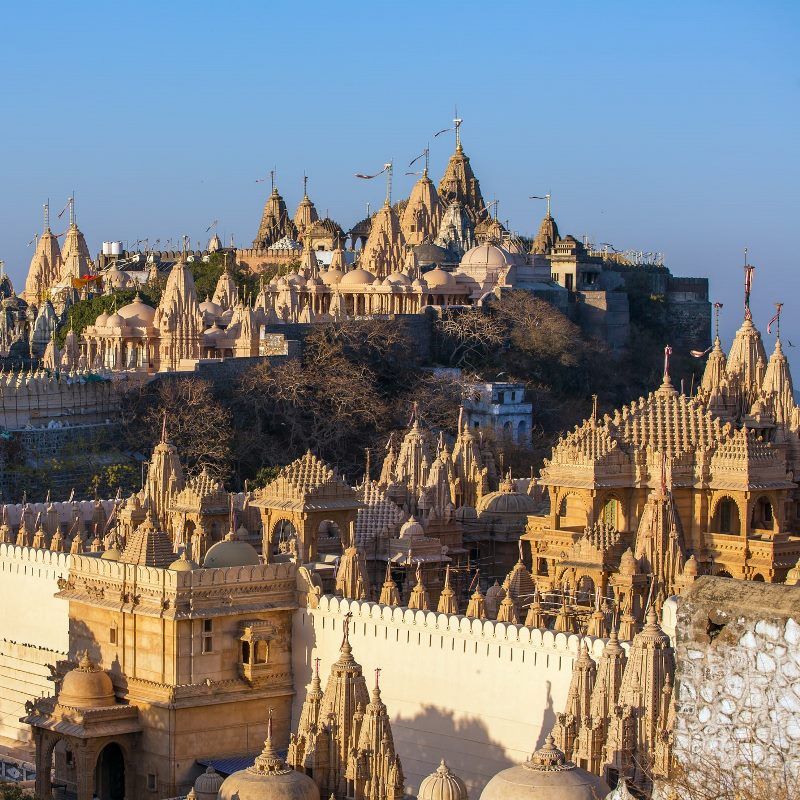
Morning breakfast, check out. Drive to Bhavnagar en route via Palitana. Palitana: a city and former princely state — major Jain pilgrimage centre. The Palitana temples are considered the most sacred pilgrimage centre (tirtha) by the Jain community. An extraordinary cluster of 1,008 Jain temples crowns the twin summits of Shatrunjaya Hill and the saddle linking them. The first Jain Tirthankara (Adinath) is said to have visited this hill; his disciple Pundarika is believed to have attained enlightenment here. Most temples date to the 16th century — earlier temples destroyed by Muslim invaders in the 14th–15th centuries. The temples are grouped into nine fortified clusters called tuks, named after wealthy devotees who paid for their construction. Continue to Bhavnagar — known as the cultural capital of Saurashtra, founded by Bhav Singhji Gohil. A strategically chosen maritime location trading with Africa, Mozambique, Zanzibar, Singapore and the Persian Gulf for almost two centuries.

Activities

  • Drive Diu → Palitana (en route)
  • Palitana: Shatrunjaya Hill — 1,008 Jain temples in nine fortified tuks
  • First Jain Tirthankara Adinath — associated pilgrimage hill
  • Drive Palitana → Bhavnagar
Private car (220 km, ~5 hrs)

Morning breakfast. Khodiyar Mata Temple (4 km from Sihor) — famous shrine of the family Goddess of the former Bhavnagar state, 36-pillared shrine with a vast mandap. Takhteshwar Temple — made of pure marble, late 19th century, on a hillock near the Takhteshwar railway station; breathtaking view. Gandhi Smriti — established 1955, living monument to Gandhiji; houses a Gandhi picture gallery, museum, Khadi Gramodyog Bhandar and library. Velavadar National Park (65 km north of Bhavnagar) — home to over 1,000 black bucks. Black bucks were protected by the Bishnoi community until the state took over this role.

Activities

  • Khodiyar Mata Temple — 36-pillared shrine (4 km from Sihor)
  • Takhteshwar Temple — pure marble, hillock, breathtaking view
  • Gandhi Smriti — picture gallery, museum, Khadi Bhandar, library (established 1955)
  • Velavadar National Park — over 1,000 black bucks (65 km north)
Private car

Morning breakfast, check out. Transfer to Bhavnagar airport for flight to Mumbai. We assist you with your transfer to the airport for boarding your onward flight. Our tour concludes. We thank you for your patronage and look forward to serving you again in the near future.

Activities

  • Transfer to Bhavnagar airport
  • Domestic flight Bhavnagar → Mumbai
  • Transfer for onward international flight from Mumbai
Domestic flight to Mumbai

Flexibility

En-Route Options

Optional Stop

Modhera Sun Temple

98.7 km from Ahmedabad — en route or day excursion on Day 4.

Optional Stop

Adalaj Vav

35 km from Ahmedabad — finest stepwell, en route or day excursion on Day 4.

Add-Ons

Optional Experiences

Optional

Rann of Kutch Extension

An optional extension to the Great Rann of Kutch — India's vast salt desert, particularly spectacular during the Rann Utsav festival (November–February) when the white salt flats reflect the full moon.

Optional

Somnath Museum

The Somnath Museum houses archaeological findings from this ancient site and provides context for the temple's legendary history of destruction and rebuilding across seven centuries.

Responsible Tourism

“Taking into consideration the well-being of animals, we as a responsible tour operator do not encourage the ride nor any activities related with the animals.”
Journey at a Glance

Duration13 Days / 12 Nights
Best SeasonOctober – March
Destinations11 Cities
PricingRequest a Quote
Crown of the West: Temples, Wildlife & Island Forts — Mumbai & Gujarat gallery image 1
Crown of the West: Temples, Wildlife & Island Forts — Mumbai & Gujarat gallery image 2
Crown of the West: Temples, Wildlife & Island Forts — Mumbai & Gujarat gallery image 3

Plan This Journey

Om will personally respond to your enquiry.

Choose a full journey, a short trip, or both.

Your information is safe with us. We will never share your details.

Or reach us directly: WhatsApp Email

Begin This Journey

Ready to Experience Crown of the West?

Share your vision and Om will craft your India experience.