Indian Routes & TrailsA Signature of Excellence
Deccan Monuments & Rock-Cut Sanctuaries Explorer — Indian Routes & Trails
All Journeys
13 Days / 12 Nights October – Marchheritagespiritual

Deccan Monuments & Rock-Cut Sanctuaries Explorer

A 13-Day Journey from Mumbai through Ajanta, Ellora, Hyderabad, Gulbarga, Bijapur, Badami and Hampi

MumbaiAurangabadAjantaElloraHyderabadGulbargaBijapurBadamiHampiHubliMumbai

Overview

About This Journey

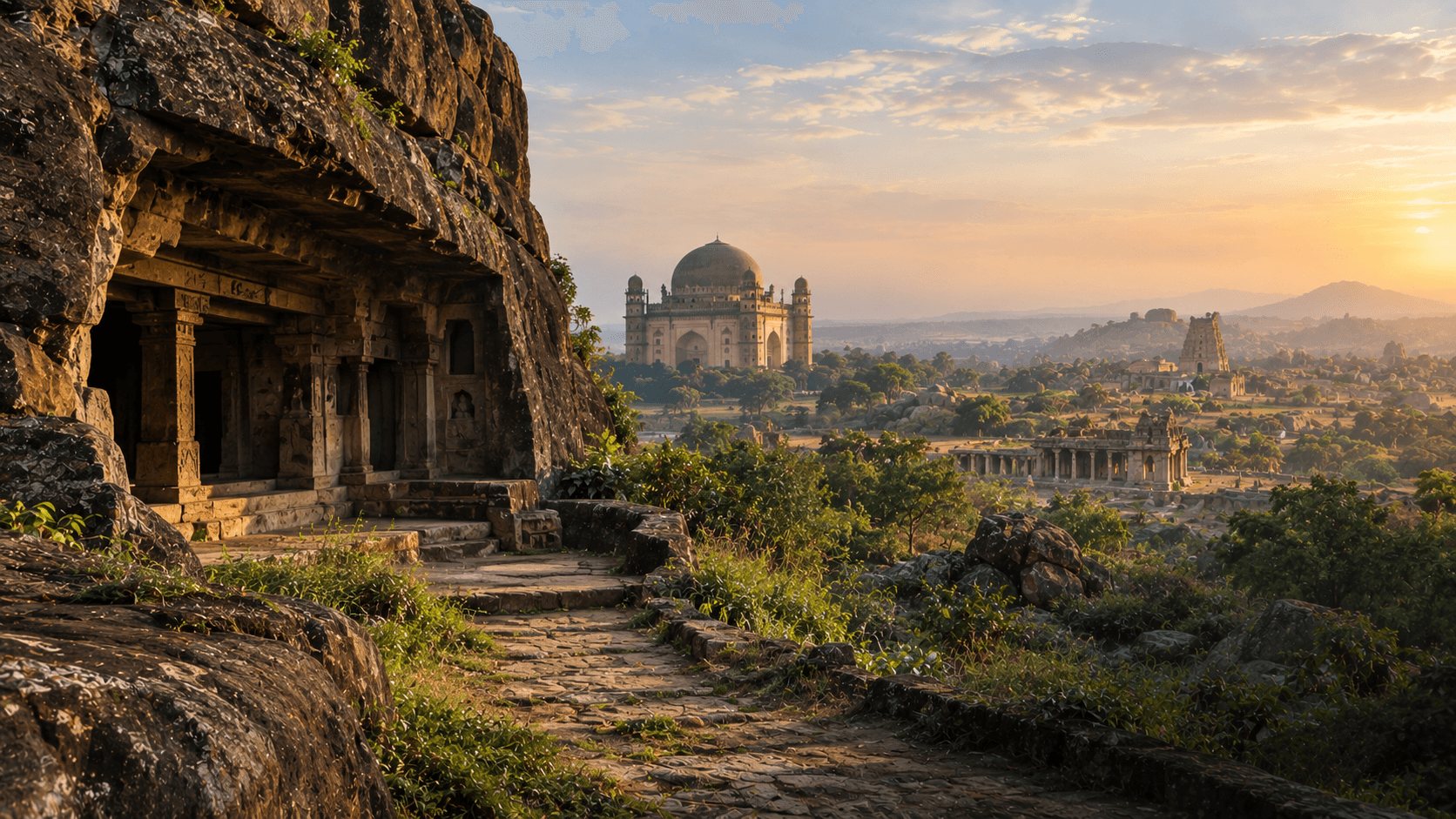
This journey follows the Deccan's extraordinary cave-temple and dynastic-monument trail. Mumbai opens with the Victorian Gothic quarter and the 5th-century Elephanta Caves before a flight to Aurangabad. The two UNESCO cave sites define the journey's centre: Ajanta's 30 rock-cut Buddhist caves with their masterpiece murals (2nd century BCE–5th century CE) and Ellora's 34 caves spanning Buddhist, Hindu and Jain traditions across three dynasties, culminating in the staggering Kailasanatha Temple (Cave 16). South across the Deccan, Hyderabad offers Golconda Fort and the Qutb Shahi tombs before the Bahmani and Adil Shahi sultanate capitals of Gulbarga/Bidar and Bijapur close the Islamic heritage strand. The Chalukya cave temples of Badami and Pattadakkal bring the journey back to Hindu and Jain antiquity before Hampi's monumental Vijayanagar ruins bring it to a triumphant close.

Highlights

Journey Highlights

Gateway of India, Elephanta Caves (UNESCO, 5th century CE) and Chhatrapati Shivaji Terminus — Mumbai
Ajanta Caves (UNESCO) — 30 rock-cut Buddhist caves, earliest and finest Buddhist paintings in India
Ellora Caves (UNESCO) — 34 caves spanning Buddhist, Hindu and Jain; Kailasanatha Temple (Cave 16)
Golconda Fort, Salarjung Museum and Birla Temple — Hyderabad
Charminar and Qutb Shahi Tombs — Hyderabad
Bidar Fort, Rangin Mahal and 16 Khambah Masjid — Bidar (en route Gulbarga)
Gulbarga Fort and Jama Masjid (Persian-influenced) — Gulbarga
Gol Gumbaz (one of the world's largest masonry domes, Whispering Gallery) — Bijapur
Badami rock-cut cave temples (6th–8th century) — Chalukya dynasty
Pattadakkal (UNESCO) — Chalukya temples fusing Nagara and Dravida traditions
Vittala Temple (56 musical pillars, Stone Chariot) and Virupaksha Temple — Hampi (UNESCO)

Day by Day

Detailed Itinerary

Arrive at Chhatrapati Shivaji Maharaj International Airport (BOM) Terminal 2. Traditional welcome and transfer to hotel. Mumbai: India's financial capital and commercial powerhouse. Consisting of seven swampy islands when the Portuguese acquired it in 1534. Afternoon Half Day Tour: experiential colonial heritage walk around Kala Ghoda. Begins at Kala Ghoda historic cultural quarter: 1) Chhatrapati Shivaji Maharaj Vastu Sangrahalaya — architecture and collection; 2) Jahangir Art Gallery — rotating exhibitions; 3) University of Mumbai and Rajabai Clock Tower; 4) Bombay High Court — Gothic Revival; 5) Elphinstone College (19th century Gothic); 6) David Sassoon Library; 7) Yacht Club; 8) Royal Bombay Yacht Club; 9) Gateway of India; 10) Taj Mahal Hotel (1903, built by Jamshedji Tata).

Activities

  • Airport welcome — CSMIA Terminal 2
  • Private transfer to hotel
  • Kala Ghoda heritage walk: Chhatrapati Shivaji Maharaj Vastu Sangrahalaya, Jahangir Art Gallery, University of Mumbai, High Court
  • Gateway of India
  • Taj Mahal Hotel (1903)
Private air-conditioned car

Morning: drive to Elephanta Caves. Boat cruise from Gateway of India (leaves 09:00, returns ~13:30). Elephanta Caves Island: 6th century AD Shiva cave temples chiselled into a rocky cliff — some of the greatest masterpieces of Indian sculpture. Originally called Gharapuri ("Island of Caves"), renamed Elephanta by the Portuguese after a stone elephant. UNESCO World Heritage Site. Return. Continue: 3) Chhatrapati Shivaji Maharaj Vastu Sangrahalaya (formerly Prince of Wales Museum, Indo-Saracenic, foundation stone laid by Prince George V in 1905). 4) Chhatrapati Shivaji Maharaj Terminus: Victorian Gothic extravaganza, completed 1888. 5) Crawford Market (now Mahatma Jyotiba Phule Market) — designed by William Emerson, completed 1869.

Activities

  • Gateway of India
  • Boat cruise to Elephanta Caves Island (UNESCO, 6th century CE Shiva temples)
  • Chhatrapati Shivaji Maharaj Vastu Sangrahalaya (Prince of Wales Museum)
  • Chhatrapati Shivaji Maharaj Terminus (Victoria Terminus, 1888)
  • Crawford Market
Private car + boat (09:00 departure)

Boat cruise leaves Gateway of India at 09:00, returns approximately 13:30.

Morning breakfast, check out. Transfer to airport, domestic flight to Chhatrapati Sambhajinagar (Aurangabad). Chhatrapati Sambhajinagar, formerly known as Aurangabad, is the largest city in northern Maharashtra and the nearest air link to the splendid caves at Ellora and Ajanta. Founded in 1610 by Malik Ambar, it became the headquarters of Aurangzeb, the last Mughal emperor, in 1653.

Activities

  • Flight Mumbai → Chhatrapati Sambhajinagar (Aurangabad)
  • Transfer to hotel
Domestic flight to Aurangabad

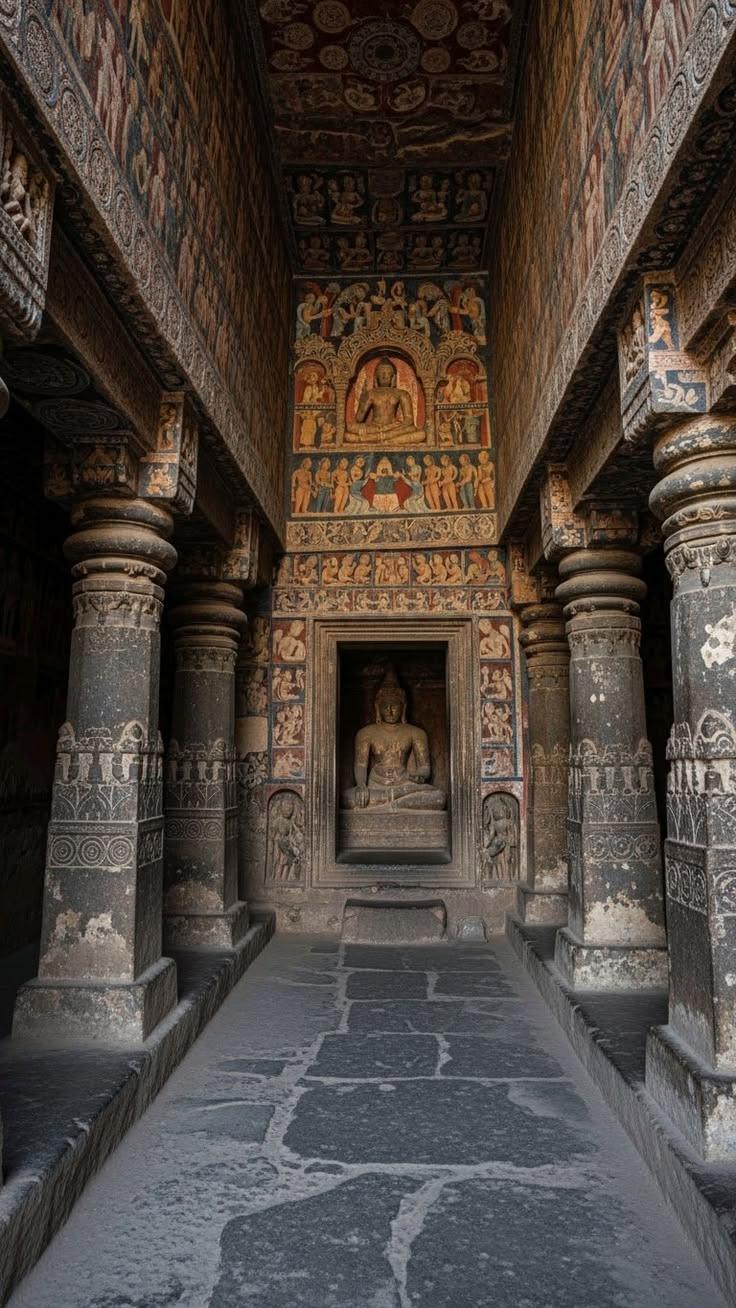
Ajanta Caves (102 km from Aurangabad): UNESCO World Heritage Site. 30 extraordinary rock-cut Buddhist caves in a horseshoe-shaped escarpment overlooking the Waghora River gorge. Dating broadly from the 2nd century BCE to the 5th–6th centuries CE, the caves contain the earliest and finest examples of Buddhist paintings in India — murals of the Buddha's life and Jataka Tales. Rediscovered accidentally in 1819 by John Smith of the 38th Madras Cavalry. Later: Ellora Cave Temples (110 km from Ajanta). 34 caves hewn from a 2-km escarpment. Three distinct groups: Buddhist Caves 1–12 (Chalukya period, 7th–8th centuries) — finest is Cave 10 (Vishwakarma, Teaching Buddha before votive stupa); Hindu Caves 13–29 (7th–9th centuries) — peak of Ellora's development, finest is the magnificent Kailasanatha Temple (Cave 16, UNESCO) commissioned by Rashtrakuta King Krishna I in the 8th century, spanning 84m×47m, carved from 85,000 cubic metres of rock to depict Mount Kailasa — the sacred abode of Lord Shiva; Jain Caves 30–34 (9th century) — simpler, later stage.

Activities

  • Ajanta Caves (UNESCO) — 30 rock-cut Buddhist caves, 2nd century BCE–5th century CE
  • Ajanta murals: Buddha's life and Jataka Tales — earliest and finest Buddhist paintings in India
  • Ellora Caves (UNESCO) — 34 caves, three religions
  • Buddhist Caves 1–12: Cave 10 Vishwakarma — Teaching Buddha
  • Hindu Caves 13–29: Kailasanatha Temple (Cave 16) — 84m×47m, 85,000 cubic metres carved rock
  • Jain Caves 30–34
Private car (102 km to Ajanta, 110 km Ajanta to Ellora)

Morning breakfast, check out. Transfer to airport, domestic flight to Hyderabad — the City of Pearls. Half Day Tour: the historic heart of the city around the Charminar — the iconic 16th-century monument and gateway to Hyderabad's old quarters. Laad Bazaar — bangles, pearls, textiles and traditional crafts. Mecca Masjid — one of Hyderabad's most significant historic mosques. Qutb Shahi Tombs — rulers of the Qutb Shahi dynasty. Chowmahalla Palace — courtyards, ceremonial halls and royal collections.

Activities

  • Domestic flight Aurangabad → Hyderabad
  • Charminar — 16th-century landmark and gateway to Hyderabad old quarters
  • Laad Bazaar — bangles, pearls, textiles
  • Mecca Masjid
  • Qutb Shahi Tombs
  • Chowmahalla Palace — Nizam's courtyards and royal collections
Domestic flight to Hyderabad

Morning: Golconda Fort (13th century, transformed by Qutb Shahi dynasty 1518–1580 into a splendid fortified city). "Shepherd's Hill" fortress sprawling across a boulder-strewn plateau — Kohinoor diamond once housed here. Colossal ruins cover 40 sq km. Salarjung Museum: eclectic collection of over 46,000 art objects, 8,000 manuscripts, 60,000 printed books — representing Indian, Middle Eastern, Persian, Chinese, European, Japanese and Far Eastern traditions (collection of Salarjung III, Prime Minister of Hyderabad 1912–1914). Highlights: veiled Rebecca, jade collection, Indian miniature paintings and sculptures, Bidriware, ivory, textiles and metalwork, European paintings, furniture, clocks and decorative arts, Persian carpets and manuscripts, historical arms and weapons. Birla Temple: beautiful white-marble Hindu temple dedicated to Lord Venkateswara, on Naubat Pahad hill.

Activities

  • Golconda Fort — 13th century, Qutb Shahi dynasty, former home of the Kohinoor diamond
  • Salarjung Museum — 46,000+ art objects: veiled Rebecca, jade, miniatures, Bidriware
  • Birla Temple — white marble, Lord Venkateswara, Naubat Pahad hill
  • Optional: Falaknuma Palace
Private car

Morning breakfast, check out. Drive first to Bidar (145 km) — an atmospheric historic town in northern Karnataka, renowned for its Bahmani heritage, imposing fort and distinctive Bidri craft. Bidar Fort: vast fortified complex from the Bahmani period — enormous gateways, defensive walls, palaces, mosques and courtyards. Rangin Mahal — most ornate palace of the Bahmani period. 16 Khambah Masjid. Gagan Mahal. Dargah of Gesu Daraz. Haft Gumbaz — group of impressive Bahmani royal tombs. Shah Bazaar Mosque. Continue to Gulbarga (115 km). Check in.

Activities

  • Drive Hyderabad → Bidar (145 km)
  • Bidar Fort — Bahmani capital fortifications
  • Rangin Mahal — most ornate Bahmani palace
  • 16 Khambah Masjid
  • Dargah of Gesu Daraz
  • Haft Gumbaz — Bahmani royal tombs
  • Shah Bazaar Mosque
  • Drive Bidar → Gulbarga (115 km)
Private car (260 km total, ~5 hrs)

Morning: visit Gulbarga — first capital of the Bahmani kingdom before the capital shifted to Bidar in the 15th century. Gulbarga Fort: most significant historic landmark — enormous fortifications, gateways and surviving monuments. Within the fort: the Jama Masjid, an unusual mosque with strong Persian influences, vast roofed prayer hall, numerous arches and domes. Haft Gumbaz — monumental Bahmani royal tombs. Khwaja Bande Nawaz Dargah — dedicated to the celebrated Sufi Saint Khwaja Syed Muhammad Gesu Daraz. After lunch, drive to Bijapur.

Activities

  • Gulbarga Fort — Bahmani capital fortifications
  • Jama Masjid within the fort — Persian-influenced architecture
  • Haft Gumbaz — Bahmani royal tombs
  • Khwaja Bande Nawaz Dargah — Sufi saint Gesu Daraz
  • Drive Gulbarga → Bijapur (170 km, ~3.5 hrs)
Private car (170 km, ~3.5 hrs)

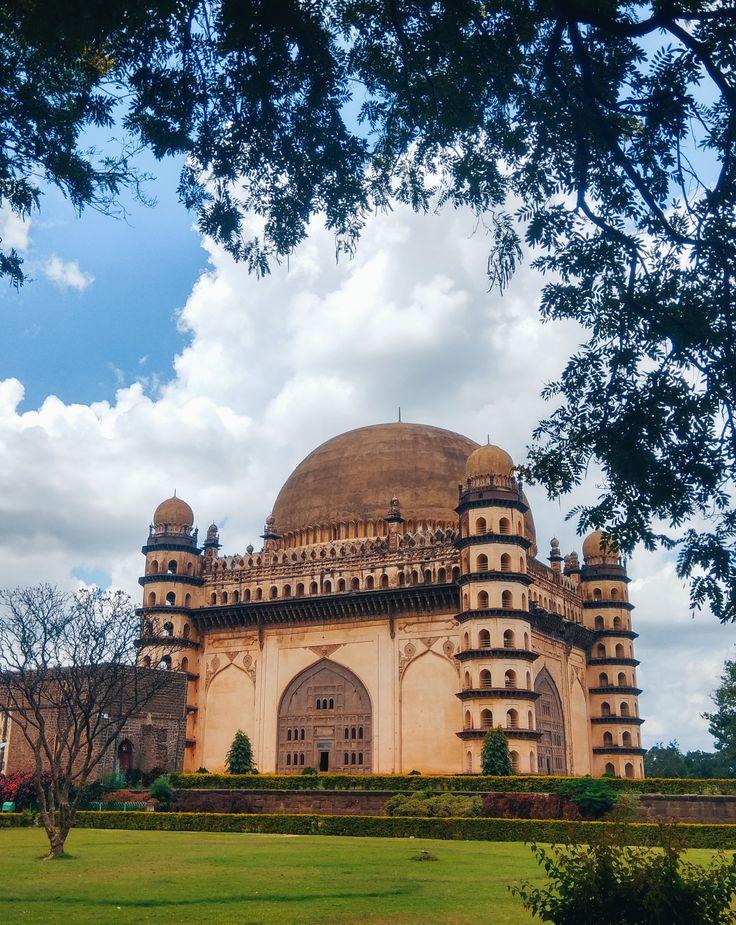
Morning: Bijapur highlights. Gol Gumbaz: mausoleum of Sultan Adil Shah — its enormous dome is one of the largest masonry domes in the world; the famous Whispering Gallery creates an intriguing acoustic experience. Ibrahim Rauza: often considered one of the finest examples of Deccani architecture — elegantly proportioned mausoleum and mosque with intricate stone carving and delicate arches. Jama Masjid: expansive prayer hall and impressive domed architecture. Drive to Badami en route via Ajhole. Ajhole: "architectural laboratory of Indian temple architecture" (Early Chalukya, 6th–8th centuries). Durga Temple, Lad Khan Temple, Meguti Jain Temple, Ravana Phadi Cave Temple, Huchimalli Temple. Arrive Badami: rock-cut cave temples sculpted between 6th–8th centuries AD. Cave 1 (Shiva Natarajan, 18 arms), Cave 2 (Vishnu — Varaha and Trivikrama), Cave 3 (inscribed 578 CE — Narasimha and Trivikrama avatars), Jain cave (Tirthankara Adinath, 12th century inscriptions), Mallikarjuna Temple (11th century, star-shaped plan).

Activities

  • Gol Gumbaz — one of world's largest masonry domes, Whispering Gallery (Bijapur)
  • Ibrahim Rauza — finest Deccani architecture, intricate stone carving
  • Jama Masjid — Bijapur
  • The Citadel, Mecca Masjid, Sat Manzil — Bijapur
  • Drive to Ajhole: Durga Temple, Lad Khan Temple, Meguti Jain Temple
  • Badami rock-cut caves: Cave 1 (Shiva, 18 arms), Cave 2 (Vishnu), Cave 3 (578 CE), Jain Cave
  • Mallikarjuna Temple (11th century, star-shaped plan)
Private car (125 km, ~3 hrs)

Morning: visit the Badami cave temples, then drive to Hampi en route stopping at Pattadakkal. Pattadakkal (UNESCO World Heritage Site): one of the finest places to understand the evolution of early Indian temple architecture. Located on the Malaprabha River, it flourished under the Chalukyas of Badami during the 7th–8th centuries. The monument complex is particularly remarkable for bringing together northern Nagara and southern Dravida architectural traditions in a single setting. Highlights: Virupaksha Temple (built by Queen Lokamahadevi in 8th century to celebrate victory over the Pallavas — richly carved walls depicting Ramayana, Mahabharata), Mallikarjuna Temple, Papanatha Temple, Sangameshwara Temple, Galaganatha Temple. Arrive Hampi by evening.

Activities

  • Badami cave temples — morning visit
  • Pattadakkal (UNESCO): Virupaksha Temple (8th century, Queen Lokamahadevi), Nagara and Dravida traditions
  • Mallikarjuna, Papanatha, Sangameshwara, Galaganatha Temples — Pattadakkal
  • Arrive Hampi
Private car

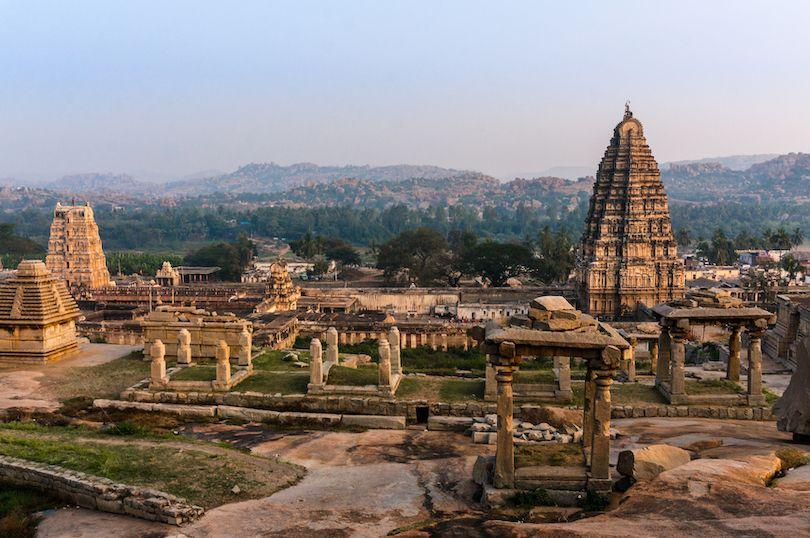
Day excursion to Hampi — capital of the Vijayanagar empire, founded 1336 by Harihara and Bukka. One of the wealthiest and most important cities of medieval South India (14th–16th centuries). Morning: Vittala Temple — 56 musical pillars complex, Stone Chariot, elaborate mandapas dedicated to Lord Vishnu. Afternoon: Lotus Mahal, Queen's Bath, Elephant Stables, Narasimha monolith, Ganesha monolith, Virupaksha Temple, Tungabhadra River, Matanga Hill.

Activities

  • Vittala Temple — 56 musical pillars, Stone Chariot, elaborate mandapas
  • Lotus Mahal — royal enclosure
  • Queen's Bath
  • Elephant Stables
  • Narasimha monolith and Ganesha monolith
  • Virupaksha Temple — Tungabhadra River
  • Matanga Hill
Private car + walking

Morning breakfast, check out. Drive to Hubballi (Hubli) Airport — approximately 160 km (3–3.5 hours) by road. Domestic flight to Mumbai. Arrive Mumbai, transfer to hotel. Rest of the day at leisure.

Activities

  • Drive Hampi → Hubballi Airport (160 km, ~3–3.5 hrs)
  • Domestic flight Hubli → Mumbai
  • Transfer to hotel in Mumbai
  • Rest of day at leisure
Private car (160 km) + domestic flight

Tour concludes. We thank you for your patronage and ensure a punctual transfer to the airport for your onward travel.

Activities

  • Transfer to Mumbai airport for onward international flight
Private car to airport

Flexibility

En-Route Options

Optional Stop

Ajhole

Architectural laboratory of early Indian temple design — en route Pattadakkal to Badami.

Optional Stop

Falaknuma Palace (Hyderabad)

Optional visit to the former Nizam's magnificent palace, now a heritage hotel.

Add-Ons

Optional Experiences

Optional

Falaknuma Palace Visit — Hyderabad

An optional visit to Falaknuma Palace — the former Nizam's magnificent hilltop palace, now operated as a luxury heritage hotel, offering guided tours of its extraordinary interiors.

Optional

Coracle Ride at Hampi

A traditional circular coracle boat ride on the Tungabhadra River at Hampi — an ancient mode of crossing still used by locals.

Responsible Tourism

“Taking into consideration the well-being of animals, we as a responsible tour operator do not encourage the ride nor any activities related with the animals.”
Journey at a Glance

Duration13 Days / 12 Nights
Best SeasonOctober – March
Destinations11 Cities
PricingRequest a Quote
Deccan Monuments & Rock-Cut Sanctuaries Explorer gallery image 1
Deccan Monuments & Rock-Cut Sanctuaries Explorer gallery image 2
Deccan Monuments & Rock-Cut Sanctuaries Explorer gallery image 3

Plan This Journey

Om will personally respond to your enquiry.

Choose a full journey, a short trip, or both.

Your information is safe with us. We will never share your details.

Or reach us directly: WhatsApp Email

Begin This Journey

Ready to Experience Deccan Monuments & Rock-Cut Sanctuaries Explorer?

Share your vision and Om will craft your India experience.