The Great Night of Shiva — Night-Long Devotion at India's Holiest Temples
About This Festival
Maha Shivratri
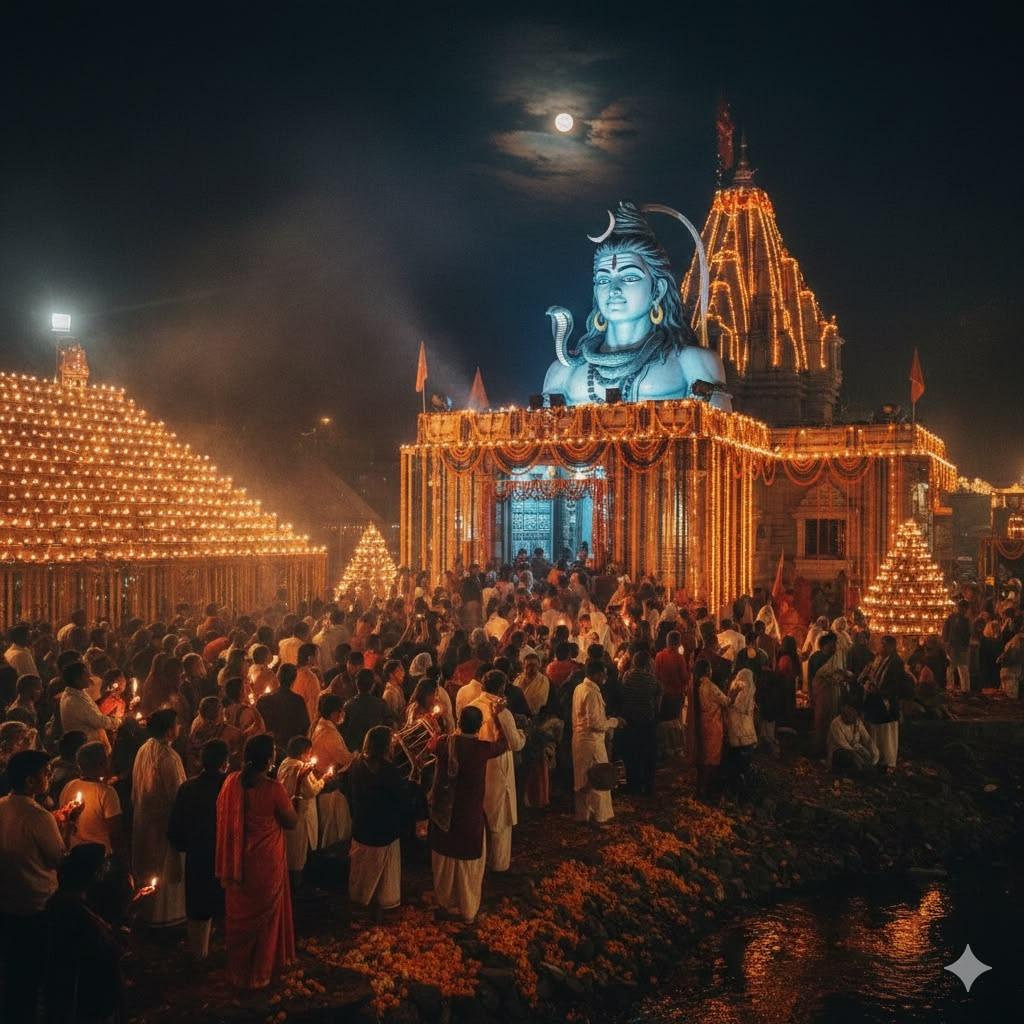
Mahashivratri — literally "the Great Night of Shiva" — is one of the most important festivals dedicated to Lord Shiva. It is observed on the 14th day of the dark fortnight (Krishna Paksha Chaturdashi) of the Hindu month of Phalguna, usually in February or March. Unlike many Hindu festivals that are celebrated mainly during the daytime, Mahashivaratri is especially associated with night-long worship, meditation, fasting and devotion. Shiva is one of the principal deities of Hinduism and traditionally associated with the cosmic cycle of creation, preservation and dissolution. The central object of worship is often the Shiva Lingam. Devotees perform Abhisheka — the ritual bathing of the lingam using water, milk, yogurt, honey, ghee and sugar. They may also offer Bilva (Bael) leaves, lamps, flowers, incense and fruits, and chant "Om Namah Shivaya" while remaining awake through the night in prayer and meditation. One important tradition connects the festival with the divine union of Shiva and Parvati. Mahashivaratri is particularly important at India's great Shiva temples and pilgrimage centres including: Kashi Vishwanath (Varanasi); Mahakaleshwar (Ujjain); Somnath (Gujarat); Kedarnath (Uttarakhand); Rameshwaram (Tamil Nadu); Baidyanath (Jharkhand); Trimbakeshwar (Maharashtra); Omkareshwar (Madhya Pradesh); and others. Shiva represents many things at once: the great yogi, the ascetic, the householder, the destroyer of obstacles and the force of transformation.
Where to Celebrate
Best Locations
Varanasi
Ujjain
Kedarnath
Pan-India
Plan Your Visit
Journeys That Include This Festival
perfect match 10 days
Temples, Thrones & Holy Ghats
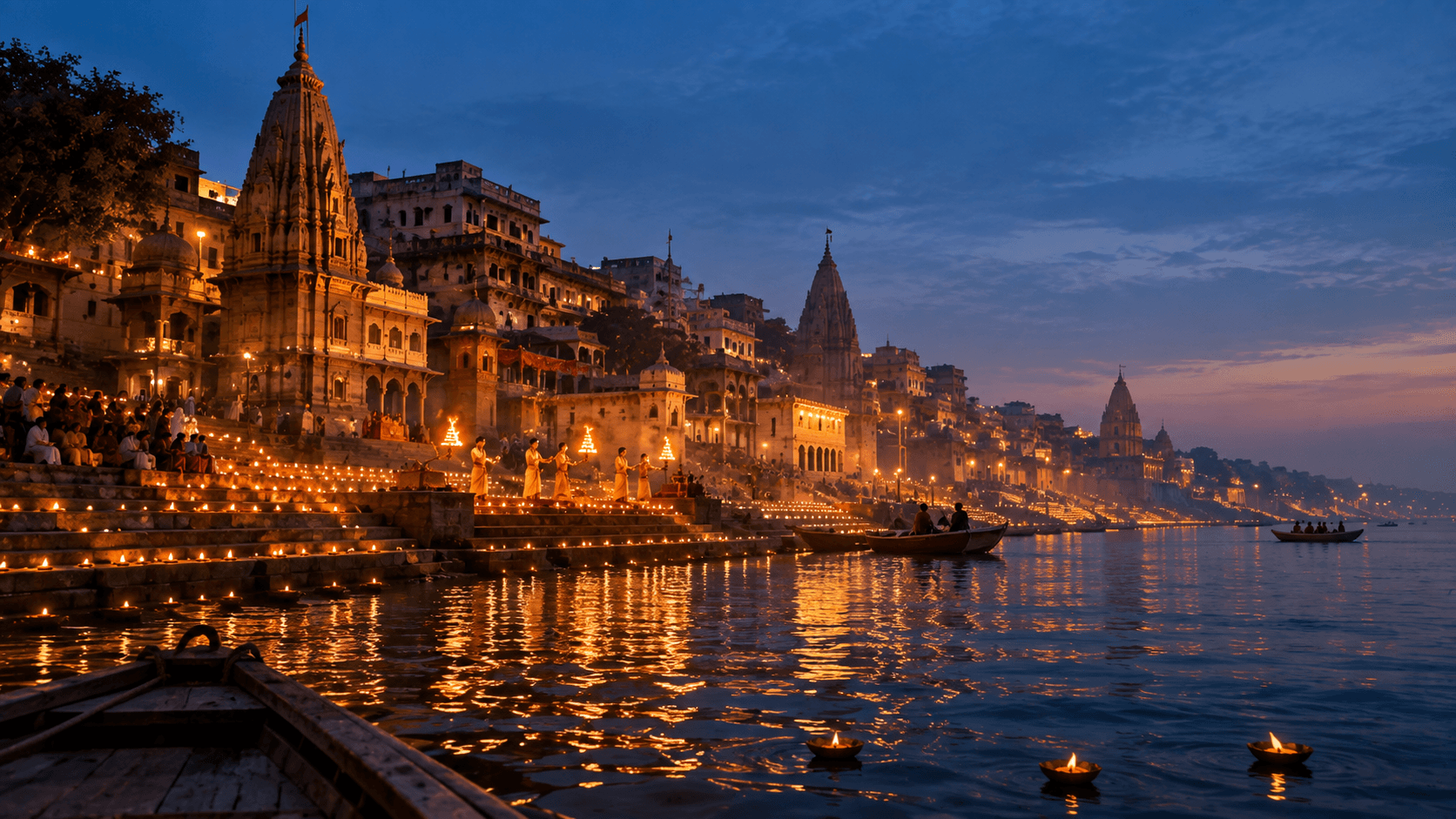
Varanasi's Kashi Vishwanath Temple comes alive for Maha Shivratri — a night of lamps, chanting and devotion on the ghats.